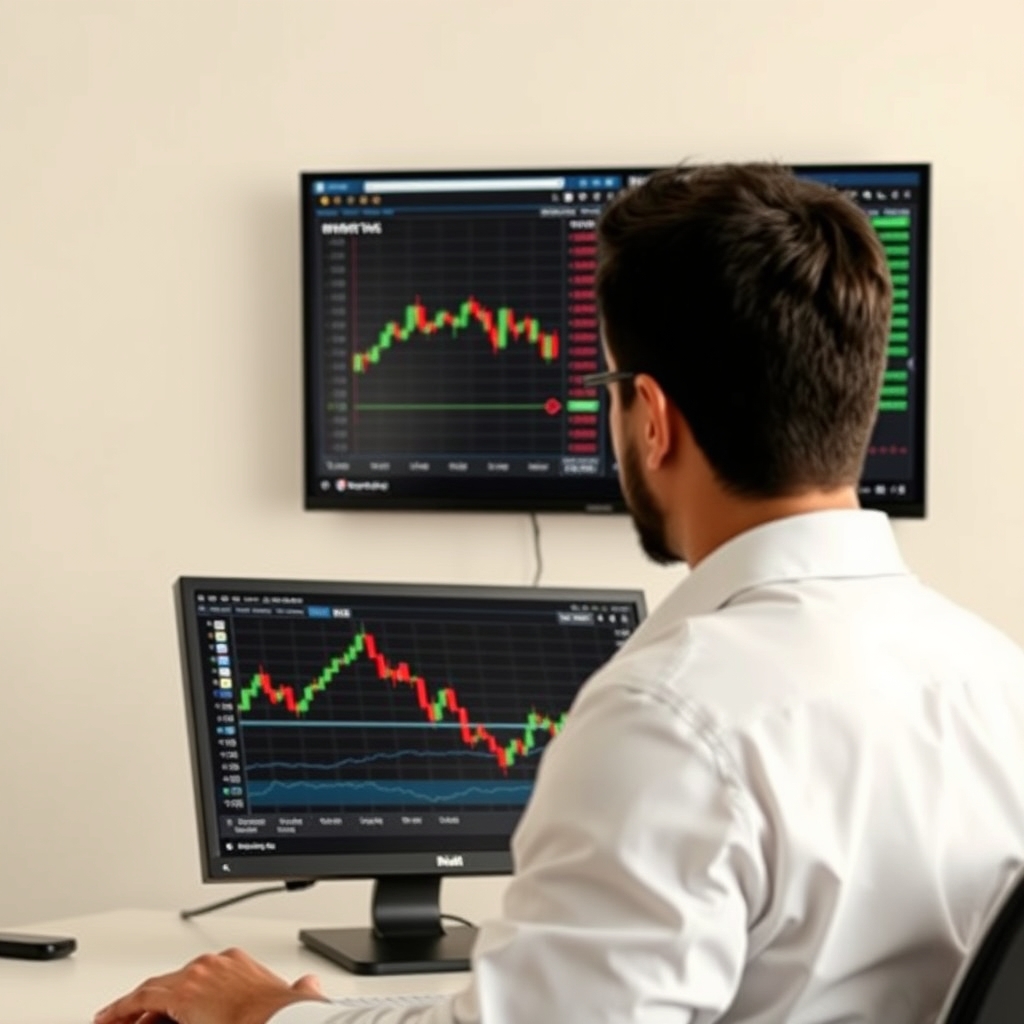
Buy/sell arrow indicators draw an up or down arrow on your chart when their internal rules are met. They are appealing because they turn a judgment call into a visual cue. The question is whether the arrow adds anything you couldn't get from the inputs behind it. Short answer: sometimes it saves time, but it rarely supplies an edge by itself, and no arrow can promise profits.
What an Arrow Indicator Actually Does
Most arrows are a repackaged version of familiar logic: a moving average crossover, an RSI or stochastic threshold, a Bollinger Band re-entry, a breakout of a recent high or low, or a combination. The arrow is a display choice, not a new source of information. If you can't find out what triggers it, treat that as a warning sign.
Repainting: the first thing to check
A repainting indicator shows an arrow, then moves or deletes it once later candles form. On a historical chart, this makes results look flawless because the arrows get "fixed" with hindsight. Many sales screenshots are exactly this.
- Load the indicator on a live 1-minute or 5-minute chart and leave it running.
- Screenshot each arrow when it appears, with the time.
- After an hour or two, compare your screenshots to the chart. Any arrows that vanished or shifted are repaints.
- Also check whether signals appear mid-candle and disappear before the close. Only close-confirmed signals are reliable to test.
Do They Work for Scalping?
Scalping targets small moves, so costs matter more than the signal. A tool that fires frequently can produce many trades that are each too small to clear the spread. Before judging any arrow, read our breakdown of spreads, commissions and slippage, and the broader realistic limits of forex scalping.
Honest tradeoffs:
- Pro: Consistent, rule-based prompts can reduce hesitation and emotional second-guessing.
- Pro: Useful as a screening aid across several pairs.
- Con: Arrows lag, since they confirm after price has already moved.
- Con: In ranging markets, trend-based arrows whipsaw repeatedly.
- Con: Beginners may skip risk management because the arrow feels like an answer.
How to Test One Before Paying
- Define the rules. Write down entry, stop, and target independent of the arrow. See scalping entry and exit rules for structure.
- Forward-test on a demo. Log at least a few dozen signals, not a handful. Record spread at entry.
- Subtract costs. Count results net of spread, commission and realistic slippage.
- Split by conditions. Compare performance by session and market state. Signals may work in one and fail in another; see the best hours to scalp and the best timeframe.
- Review drawdown, not only win rate. A high win rate with oversized losses can still lose money.
Demo fills are often better than live ones, so treat demo results as a ceiling, not a forecast.
 Recommended for youScalping Entry and Exit Rules: Indicator-Based Setups, Stops and Targets
What Is Worth Paying For?
Many capable arrow-style tools are free or bundled with platforms, and a paid one has to justify its price. Judge any product on these criteria rather than on marketing:
| Question | Good sign | Red flag |
|---|---|---|
| Logic disclosed? | Explains inputs and triggers | "Secret algorithm" |
| Repaints? | Signals fixed at candle close | Arrows change or vanish |
| Evidence | Live, dated, verifiable records | Cropped screenshots, testimonials only |
| Claims | Discusses losses and limits | Guaranteed or "accurate" signals |
| Terms | Clear refund and support policy | Vague or hidden terms |
| Customization | Adjustable settings, alerts | Fixed, unexplained output |
Pricing, refund terms and features change, so confirm current details on the vendor's official site rather than relying on third-party listings. For side-by-side reviews of specific tools, use our scalping indicators and short-term strategies hub as a starting point.
Using Arrows Sensibly
- Treat the arrow as a prompt to look, not a command to trade.
- Require confirmation, such as higher-timeframe direction or a nearby support/resistance level.
- Fix your risk per trade before entry, commonly a small fraction of the account.
- Avoid trading arrows around major news, when spreads widen.
- If your account is small, costs and position sizing become tighter constraints; read whether you can scalp with a small account.
Bottom Line
Arrow indicators can be a convenient visual layer, but they don't create an edge on their own, and leveraged trading can lose more than you expect. Verify non-repainting behavior, test net of costs, and be wary of any promise of results. If you're unsure whether a strategy suits your finances, consider speaking with a qualified financial professional.
Keep reading
 Spreads, Commissions and Slippage: What Scalping Really CostsScalping looks cheap on a chart. A 5-pip target feels small and quick. But every trade carries a fi…
 Is Forex Scalping Profitable? Realistic Limits and Who It SuitsShort answer: it can be, for some people, but it is harder than most marketing suggests. Scalping m…
 What is the best timeframe for forex scalping: 1-minute, 5-minute or 15-minute?For most traders, the 5-minute chart is the best starting point for scalping. It filters out much o…